Most new-hire failure happens in the first 30 days, and it is rarely about the candidate. It is about a small set of avoidable mistakes that turn a strong hire into a quiet quitter or a 90-day exit. The good news: every mistake on this list is cheap to fix once you know it is happening.
This is the list of 9 onboarding mistakes that show up most often, what each one costs you, and how to fix it before week 2.
Why early onboarding mistakes hurt so much
Replacement cost for a US new hire runs 1.5 to 2x annual salary once you factor in recruiting, time-to-productivity, and the gap left on the team. A 90-day exit means you absorb most of that cost without any of the upside. Onboarding mistakes are the single biggest cause of early exits, ahead of pay, ahead of role fit, ahead of management style.
The mistakes below are arranged by where in the timeline they happen. Fix the early ones first.
Mistake 1: Letting the pre-boarding window go quiet
What it looks like
The candidate signs the offer, then hears nothing for 2 to 4 weeks until day 1. By the time they show up, the excitement has cooled and they are second-guessing the move.
What it costs
5 to 10% of accepted offers ghost between signing and start date when pre-boarding is silent. The ones who do show up start week 1 with lower energy than they had on the offer call.
The fix
Send three structured touches between signing and day 1. A welcome packet at week 1 (team intro, what to expect). The day-1 schedule at week 2. A personal note from the hiring manager at week 3 with a name for "your go-to person for stupid questions". This costs the manager 30 minutes and saves you a ghost rate.
Mistake 2: Day 1 IT chaos
What it looks like
Laptop not configured. Email account not provisioned. Slack invite missing. Badge not ready. The new hire spends day 1 sitting in a chair refreshing their inbox.
What it costs
A full day of paid time. More importantly, day 1 sets the tone. "This company is disorganized" is a hard impression to undo.
The fix
Build a 24-hour buffer. IT provisioning kicks off 48 hours before day 1, the laptop ships 3 to 5 days early, the new hire confirms remote login the day before they start. Most ticketing systems can automate the trigger from the offer-accepted state.
Mistake 3: The hiring manager is "too busy" in week 1
What it looks like
The manager who fought to hire the new person now has back-to-back calls and skips most of the introductions, the lunch, the early check-ins. The new hire reads the silence as "I am not a priority here".
What it costs
1:1 manager time in week 1 is the single biggest predictor of 90-day retention in most published HR research. Under 4 hours of manager time in week 1 correlates with measurably higher early-attrition risk.
The fix
Calendar-block 6 to 8 hours of manager time in the new hire's week 1, before the candidate even accepts. Make it non-movable. The manager can move every other meeting, not these.
Mistake 4: No onboarding buddy
What it looks like
The new hire has the manager for big questions and HR for paperwork, but no peer-level contact for the small stuff. They sit on questions like "where do we keep design files" or "is this person OK to ping after hours" for days.
What it costs
Lost momentum, slower ramp, isolation. Without a buddy, the new hire's network in week 1 is one person (the manager) and a few names from intro calls. A buddy doubles or triples that within a week.
The fix
Assign a peer-level buddy before day 1. The buddy is not the manager, is at the same career stage, and has been at the company at least 6 months. Their job for the first 4 weeks: be the "stupid questions" channel and grab lunch twice in week 1.
Mistake 5: A vague first deliverable
What it looks like
"Get up to speed and let me know if you have questions" as the entire first-month brief. The new hire spends 2 weeks reading documentation and waiting for something to do.
What it costs
Confidence. By week 3 the hire starts to wonder whether the role is real, whether they were overhired, whether the team actually needs them. Some of them quietly start looking again.
The fix
Pre-define a contained, well-scoped first deliverable. Something they can complete in 1 to 3 days during week 2 or 3 with support. "Submit a competitor analysis on three vendors by Friday of week 3" is a deliverable. "Get up to speed" is not. Pre-defining the first deliverable also forces the manager to think through whether they actually have meaningful work for the role.
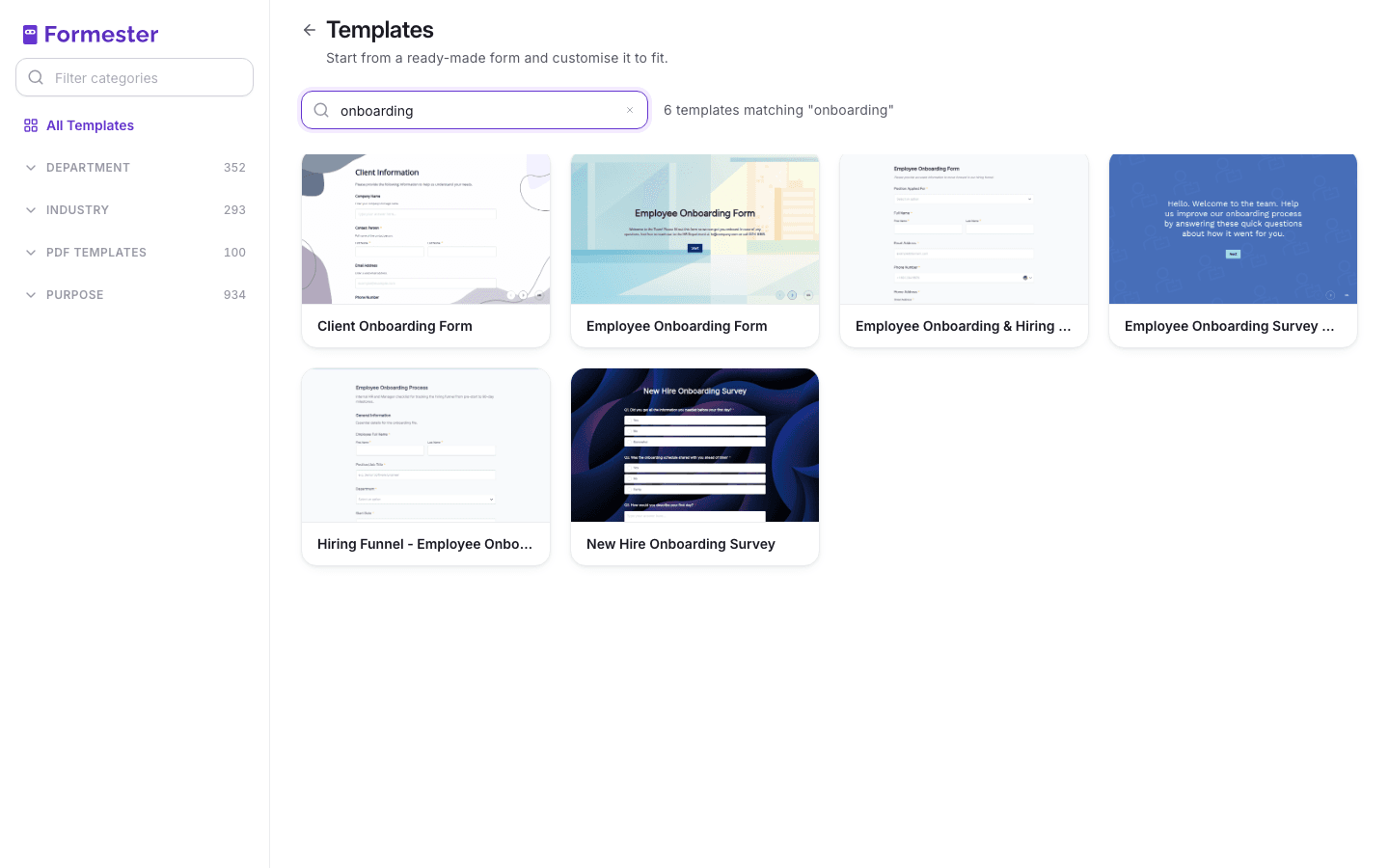
Turn every mistake on this list into a form. Formester ships pre-built onboarding templates for pre-boarding welcome, day-1 IT provisioning, buddy assignments, first-deliverable briefs, and 30/60/90 check-ins. Copy one, publish it, add it to your offer-accepted automation.
Mistake 6: Skipping the 30-day check-in
What it looks like
The formal review only happens at 90 days. Small issues that surface in week 2 or 3 (confusion about scope, friction with a peer, a tool they need access to) compound for two more months.
What it costs
Small problems that could have been solved with a 15-minute conversation become 90-day-review problems. By then the hire has lost a month of productivity to the same friction.
The fix
A 30-minute structured check-in at end of week 4. Three questions: what is working, what is blocking, what is missing. Keep it conversational. The hire often surfaces something the manager would not have noticed for another month.
Mistake 7: Letting onboarding end at week 1
What it looks like
Orientation gets a formal program (welcome, intros, paperwork, lunch). Then week 2 onward, the new hire is dropped into normal team rhythm with no scaffolding. The hire feels welcomed and then abandoned.
What it costs
The productivity ramp slows. Without a continued cadence (weekly 1:1, structured shadowing, peer pairing) the hire ramps on their own at whatever pace works for them. Some never fully ramp.
The fix
Extend the onboarding cadence through week 12. Weekly 1:1 with the manager. Weekly check-in with the buddy. A formal 30-day and 90-day review. Onboarding is a 90-day process, not a 5-day orientation.
Mistake 8: Overloading week 1 with deliverables
What it looks like
The opposite mistake. The manager, eager to prove the hire is going to be productive, loads them up with project work in days 2 and 3. The hire spends week 1 trying to produce output before they have context.
What it costs
Poor first deliverables (because they did not have the context yet), stress, the wrong impression of what the role is. The hire learns that the company values output over thoughtfulness, and either burns out or coasts to match.
The fix
Week 1 is for context, not output. Real deliverables start week 2 or 3 once the hire has shadowed, read the docs, and met the cross-functional partners. A capable senior hire can absorb context for 2 weeks and still be a high performer at 90 days.
Mistake 9: No feedback loop on the onboarding process itself
What it looks like
HR runs the same orientation deck for every hire, year after year, with no idea whether it is working. New hires fill out a satisfaction survey on day 5 that gets read by no one.
What it costs
The same mistakes repeat on every new hire. The pattern shows up in 1-year retention numbers but never gets traced back to the onboarding process.
The fix
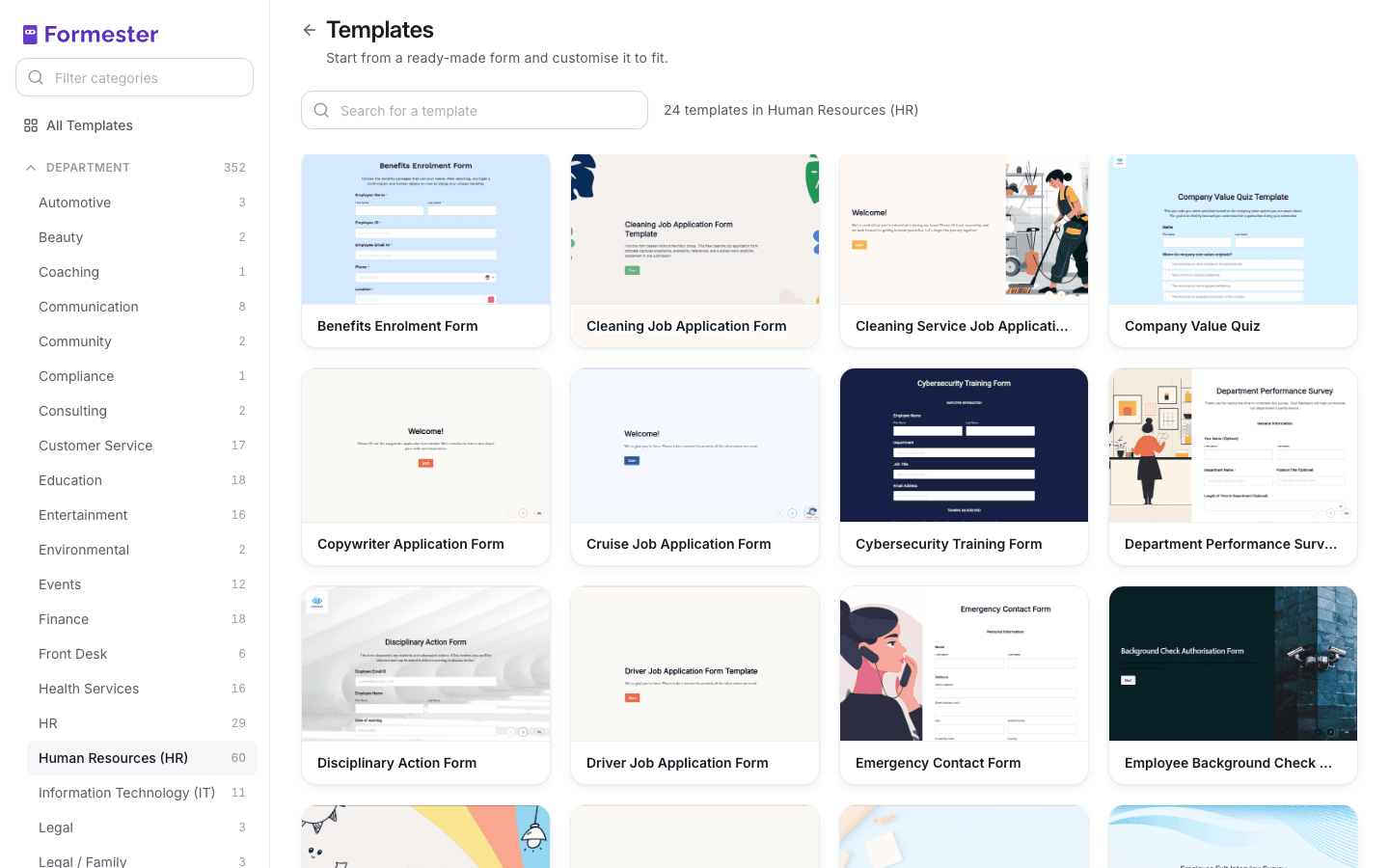
A structured anonymous survey at 30, 60, and 90 days, with the same questions each time. Read the results monthly. Update the process when patterns surface (e.g., week-1 IT issues, manager-time gaps, missing context for a specific role). A structured new-hire onboarding form captures the early-week feedback consistently across cohorts.
The takeaway
The 9 mistakes above are not exotic. Every HR team knows about them in the abstract. The trick is treating onboarding as a 90-day process with calendar-locked checkpoints, not as a week-1 orientation. Fix the manager-time block first (mistake 3), assign a buddy (mistake 4), pre-define the first deliverable (mistake 5), and the rest mostly take care of themselves.
Related reading
- HR form templates - 60 pre-built templates covering onboarding, benefits enrolment, disciplinary action, background checks, and employee surveys.
- How online forms simplify employee onboarding for HR - the operational case for moving pre-boarding paperwork off email.
- New hire onboarding survey questions to ask - the 30/60/90-day question set that catches process gaps early.
- How to create a consent form - for policy acknowledgements, employee handbooks, and background-check authorizations that need a signed audit trail.